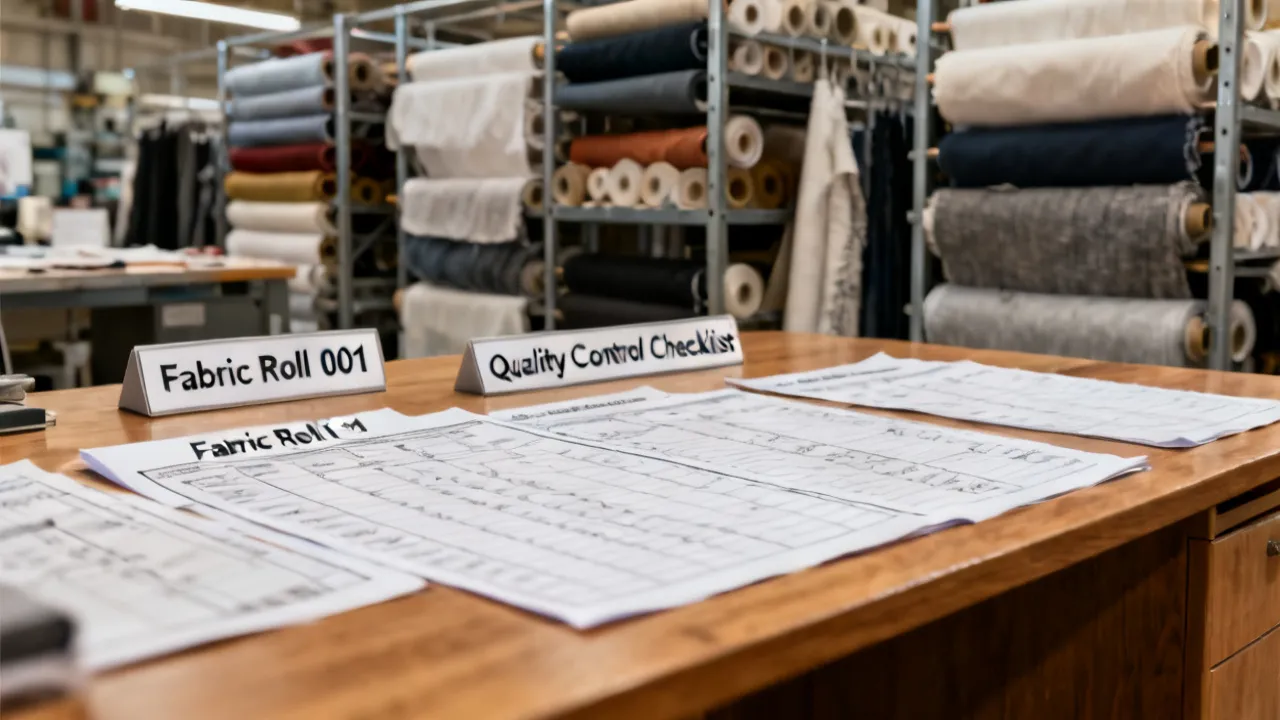
Ade Sara: How to Evaluate Quality and Supply
This guide helps you evaluate Ade Sara by focusing on quality signals, supplier fit, and practical procurement conditions. Objectively, “Ade Sara” is used across markets as a brand or product reference, and buyers typically compare specifications, sourcing transparency, and service reliability. You’ll find a structured comparison approach, requirements checklist, and FAQs to support better decisions.

1) Critical takeaways for choosing Ade Sara with confidence
If you’re evaluating Ade Sara, the fastest path to a sound decision is to verify three things upfront: specifications, provenance, and service conditions. Many buying missteps happen when people focus on appearance, one-line marketing claims, or a unit price—while overlooking quality-control processes, documentation quality, and supplier responsiveness. In procurement, a product label can look “the same” across sellers while the actual composition, manufacturing run, tolerances, packaging integrity, and batch-to-batch variability differ substantially. That’s why confidence should come from evidence you can check, not from impressions.
From an industry perspective, strong suppliers can usually show consistent batch behavior, clear product documentation, and transparent ordering terms. Your goal is not to “guess” the quality of Ade Sara, but to audit it through evidence you can validate at the time of ordering, at shipment, and after receipt. A reliable approach is to treat “Ade Sara” as a supply-chain-controlled item: you want the right variant, produced under controlled conditions, with traceability, and delivered under agreed logistical responsibilities.
Three practical mindsets help here:
- Assume variation exists: Even when a brand name is shared, manufacturing runs, supplier sourcing, and configuration changes can alter performance. Verification should anticipate that variation.
- Make quality testable: Define acceptance criteria that can be verified on arrival (and possibly after installation/usage). If quality can’t be measured, it can’t be controlled.
- Reduce ambiguity before money changes hands: The moment a purchase order is placed, you’re committing to outcomes. The best time to avoid future disputes is before payment, not after goods arrive.
When those mindsets guide you, you’ll naturally ask better questions: “What exact SKU am I buying?”, “Which batch will I receive?”, “What documentation proves the stated quality?”, “How do you handle nonconformance?”, and “What is our timeline to inspect and accept?” Those questions are not bureaucratic—they are the foundation of predictable purchasing outcomes.
2) What “Ade Sara” typically represents in procurement and product discussions
Ade Sara is commonly referenced as a brand name, product line identifier, or shorthand used in trade conversations. Because it functions as a label rather than a single technical standard, evaluation should start with the exact item name and category you intend to purchase (for example, whether it’s a consumer product, a component, a consumable, a packaged offering, or a specialty item). “Ade Sara” might be used informally to refer to a family of products; different sellers could be describing different sub-variants within the same label.
In objective terms, buyers should treat “Ade Sara” as a market identifier until proven otherwise by documentation. This matters because different sellers may offer:
- Bundled configurations: One seller may include accessories or packaging inserts while another may ship a stripped-down version.
- Different material grades or formulations: Substitutions can occur between lots, regions, or time periods.
- Different sizes or tolerances: Even if it “looks similar,” dimensional or functional limits may differ.
- Different compliance statuses: Some sellers may provide documentation for regulatory or quality standards, while others may not.
Therefore, the correct starting point is to move from the label to the actual controlled definition. Instead of asking only “Do you have Ade Sara?”, ask “Do you have Ade Sara, SKU ____ , variant ____ , specification ____ , packaging configuration ____ , and batch traceability ____ ?” When you shift the conversation from names to specs, your evaluation becomes grounded and repeatable.
3) Expert evaluation framework: how to assess quality before ordering
Professionals in procurement and quality assurance typically evaluate a product in layers. For Ade Sara, you can apply the same discipline: break uncertainty into manageable categories, request evidence for each, and tie acceptance to measurable requirements.
For practical procurement, think of the evaluation framework as a “quality chain.” If any link in the chain is missing—definition, evidence, performance, traceability, or service reliability—quality becomes harder to guarantee and disputes become more likely.
Here is a layered framework that maps directly to how quality control actually works.
- Layer A — Product definition: Confirm the SKU/item code, size/variant, composition/materials (if applicable), compatibility requirements, and packaging format. Request the official specification sheet and confirm that your intended use case aligns with the documented application. If Ade Sara is meant to fit a system (for example, a hardware assembly, a workflow, or a compatibility environment), you need explicit compatibility statements rather than assumptions.
- Layer B — Evidence of consistency: Request batch records, QC test summaries, inspection photos, or third-party certificates where relevant. Evidence should address both the “what” (results) and the “how” (the process). You’re looking for repeatable controls—not just a one-time report.
- Layer C — Performance expectations: Define measurable outcomes aligned with your use case (durability, reliability, finish consistency, defect rate targets, or other category-specific KPIs). If performance depends on storage conditions, environment, or installation practices, you should define those dependencies and ensure they match your operational reality.
- Layer D — Handling and traceability: Confirm labeling, lot traceability, recommended storage conditions, and packaging integrity checks. Traceability reduces your recovery time when problems occur; it also helps you identify whether an issue is isolated to one batch or systemic across production runs.
- Layer E — Service reliability: Validate lead times, returns workflow, warranty/defect handling, and communication standards. A product can pass initial checks but still fail in the field if replacements are slow or if defect handling is unclear.
Even when suppliers sound confident, the decisive advantage comes from documents and repeatable processes. “Ade Sara” should therefore be judged as a supply chain item with verifiable controls, not just a name. Your evaluation should be structured like a checklist that a different buyer could follow and reach the same decision, assuming they obtain the same evidence.
To make this more concrete, consider how each layer answers a real procurement question:
- Layer A asks: “What exactly are we buying?”
- Layer B asks: “How do we know it is manufactured to the stated quality?”
- Layer C asks: “What measurable results should we expect?”
- Layer D asks: “Can we identify the batch and maintain it safely until use?”
- Layer E asks: “What happens if there is a quality problem?”
This layered approach is how quality turns into a controllable variable.
4) Price thinking for Ade Sara: avoid shallow comparisons
Price is important, but industry buyers know it can be misleading without context. Many costs hide in the details: minimum order quantities, shipping terms, packaging requirements, testing fees, and lead-time risks. A “cheap” unit price can become expensive if it requires rework, causes delays, or results in returns that strain your receiving and quality processes.
When you compare Ade Sara offers, you should compare total landed cost and the risk-adjusted cost of potential rework or returns. Total landed cost includes all costs required to get the item to your receiving point in usable condition: transportation, insurance, customs or import fees (if relevant), handling charges, packaging differences, and any required documentation processing fees.
Risk-adjusted cost accounts for the probability and impact of problems. For example:
- Higher defect rate probability: If a supplier’s QC documentation is weak, your chance of receiving nonconforming items increases. That probability translates into labor time, replacement shipments, downtime, and customer dissatisfaction (depending on your downstream use).
- Long lead time risk: If their lead times are inconsistent, you could incur expedited shipping costs or missed production schedules.
- Unclear defect handling: If returns are difficult, even a small issue can become a large operational burden.
Because your prompt did not provide specific numeric pricing, this guide focuses on the evaluation method rather than unverified figures. If you share your target quantity, destination terms, and the exact Ade Sara variant, the comparison can be refined into a more specific purchase plan.
In practice, buyers often build a comparison worksheet where each supplier quote is broken into the same categories. Even without numbers, you can create a structure like:
- Unit price and quantity breaks
- Packaging inclusions (what is included/excluded)
- Shipping method and insurance
- Incoterms and risk transfer point
- Lead time and buffer assumptions
- Documentation included (QC certificate, CoC, traceability details)
- Acceptance criteria and inspection period
- Defect replacement/credit terms
Once you normalize quotes into the same structure, the “cheapest” option becomes easier to interpret as either truly cost-effective or deceptively low priced.
5) Supplier details: how to judge whether a seller is compatible
Supplier quality is often the difference between a smooth procurement cycle and repeated delays. When assessing suppliers for Ade Sara, professionals commonly look at several compatible dimensions: responsiveness, documentation discipline, operational readiness, quality escalation capability, and consistency across orders.
It’s not enough that the supplier can sell. They must be able to deliver reliably and behave predictably when something goes wrong.
Key supplier assessment points include:
- Responsiveness: Do they answer variant questions clearly and consistently? If they provide vague answers—especially about specs, lot traceability, or storage conditions—that’s a sign the process is not stable.
- Documentation discipline: Are product documents complete, legible, and aligned with the item? Documents should match the SKU. If documents say one thing and the received goods do another, trust collapses.
- Operational readiness: Can they meet your schedule without frequent changes? A supplier that frequently changes timelines may be struggling with production capacity, materials availability, or logistics coordination.
- Quality escalation: Do they have a defined process for defects, replacement batches, or corrective actions? Ask what happens when an issue is identified, who is responsible, and how quickly they respond.
- Consistency across orders: Do they describe standard operating procedures, not one-off exceptions? Consistency indicates a mature quality and procurement system.
In practice, you want suppliers who can treat your order like an operational process, not a one-time transaction. This includes communication cadence (e.g., when they send shipping updates), clarity in handling inspection findings, and willingness to support corrective actions.
A helpful approach is to request information about their quality management approach in a form that’s easy to verify—like sample QC forms, sample labels, and examples of batch/lot traceability outputs. If they can provide those, they likely have a process that works beyond just a single successful shipment.
6) Procurement conditions and requirements (what you should insist on)
To reduce risk, set clear conditions before you finalize payment. This protects both sides and helps avoid mismatches later. For Ade Sara, consider tightening the following procurement requirements. The idea is to ensure that every important “unknown” becomes a documented “known” before the transaction closes.
Here are procurement conditions that help you prevent disputes and enable faster problem resolution:
- Exact specification confirmation: Written confirmation of the Ade Sara variant, packaging, and any included accessories/components. The confirmation should reference SKU/item code and include any material/composition details where relevant.
- Quality evidence: Requested QC documentation appropriate to the product category. For example, depending on category, this could include Certificates of Conformance, inspection reports, batch test results, or relevant compliance documentation.
- Lot traceability: Lot/batch numbers included on packing lists and invoices. Traceability should allow you to trace back to production batches without excessive delays.
- Inspection window: A defined inspection-and-acceptance timeline after receipt. Many disputes occur because buyers inspect too late and suppliers claim the defects were caused after delivery.
- Defect handling terms: Replacement, credit, or documented resolution steps. The terms should specify what happens for different defect severities.
- Incoterms / shipping responsibilities: Clear allocation of transport cost and risk transfer. This determines who is responsible if the shipment is damaged in transit.
- Storage and shelf-life requirements: Storage conditions and expiry guidance where relevant. For shelf-life products, include remaining shelf-life requirements at receipt (e.g., minimum days remaining).
If any supplier cannot clearly address these points for Ade Sara, that is often a signal to start qualification. Qualification might include sample review, a smaller pilot order, and a deeper documentation audit. In quality-controlled buying, “not sure” is not the same as “we can provide an answer.” The supplier must be able to supply a documented response.
One further step that experienced buyers take is to align the procurement terms with internal operational reality. For example, if your receiving team requires 48 hours to perform inspection, specify that inspection window. If your warehouse storage conditions are specific (temperature, humidity, or segregation requirements), specify them and confirm suitability from the supplier’s handling instructions.
7) Comparison table: practical evaluation against supplier and product conditions
| Assessment Area | What to Request or Check | Why It Matters | Decision Signal |
|---|---|---|---|
| Variant & specification | SKU/item code, variant description, packaging configuration, materials/composition details | Prevents ordering a similarly named but different product | Exact match in writing; no ambiguity |
| Quality control evidence | QC summary, batch inspection records, relevant certificates for the category | Supports repeatability and defect prevention | Consistent documents across batches |
| Traceability | Lot/batch labeling, packing list alignment, trace records upon request | Enables fast root-cause resolution if issues appear | Traceability shown without excessive friction |
| Lead time realism | Confirmed production schedule and fulfillment timeline | Reduces stockouts and schedule disruption | Lead time aligns with capacity statements |
| Shipping & risk terms | Shipping method, responsibility points, Incoterms clarity | Affects total landed cost and damage responsibility | Transparent terms; no shifting after payment |
| Inspection & acceptance | Defined acceptance criteria and inspection timeline | Avoids disputes on what “good” means | Criteria are measurable and agreed in advance |
| Defect resolution | Replacement/credit policy, escalation workflow, corrective action expectations | Limits financial loss and delays | Clear steps and response SLAs |
To make the comparison table even more decision-ready, you can extend it with a scoring approach. Many teams use a simple 1–5 scale for each assessment area. The scoring is not just about numbers—it’s about forcing consistent evaluation. A supplier who scores high on documentation and traceability but low on defect workflow may still be acceptable for low-risk items, but it should not pass for mission-critical usage.
Additionally, it’s useful to note who owns each decision internally. For instance, your quality team might own acceptance criteria; your logistics team might own Incoterms verification; finance might validate payment terms. When responsibilities are clear, procurement moves faster and disputes reduce.
8) Step-by-step guide: qualifying Ade Sara suppliers efficiently
To keep the process practical, an industry-standard qualification usually follows a short, structured path. Here is a step-by-step approach you can adapt for Ade Sara. The goal is to verify enough to reduce risk quickly, without overburdening either side.
In many procurement organizations, qualification also serves as a baseline for future supplier scorecards. Once you gather evidence during the first cycle, you can streamline subsequent purchases and detect drift over time.
- Define your exact need: Identify the Ade Sara variant, quantity range, intended use case, and required delivery window. If Ade Sara is used in a downstream process, note the operational constraints (installation time, storage limits, usage environment).
- Request a full documentation packet: Ask for product specification sheets, batch/lot documentation expectations, and quality evidence relevant to the product category. Also ask for sample labels or packing list templates showing how batch/lot numbers appear.
- Run a sample or pilot assessment: For higher-stakes uses, perform a small test order and evaluate against measurable criteria before scaling. Ensure your pilot order includes representative packaging and labeling—not just a “lab sample.”
- Validate packaging and labeling: Confirm that packing lists, lot labels, and instruction content align with the documented variant. Check whether packaging supports the shipping method and preserves the integrity needed for your storage environment.
- Review lead-time and fulfillment stability: Ask for historical lead-time patterns (or at least capacity statements) and confirm their ability to meet your schedule. Request clarification on what happens if there is a production delay.
- Agree on acceptance criteria: Define what counts as acceptance and what constitutes a defect requiring escalation. Make criteria measurable and aligned to category risk.
- Confirm logistics and risk terms: Make sure shipping method, handling instructions, and responsibilities are clearly documented. Verify Incoterms or equivalent contractual terms.
- Finalize with a clear defect workflow: Ensure you have written terms describing replacement/credit and the escalation path. Include response SLAs (e.g., initial acknowledgment within X business hours).
- Monitor first deliveries closely: For the initial batches, track quality and responsiveness and adjust your supplier scorecard if needed. Use this phase to calibrate inspection procedures internally too.
Efficient qualification does not mean cutting corners—it means focusing on evidence that actually predicts performance. Sampling the wrong aspect (e.g., aesthetic appearance but not functional consistency) can waste time and still leave risk unresolved. Your qualification plan should reflect how defects actually arise in your category and how they manifest in your receiving or usage process.
As you qualify, document everything: what you requested, what you received, the exact outcomes of pilot testing, and how quickly the supplier reacted to any issues. This turns supplier qualification into organizational learning rather than a one-time effort.
9) Conditions and requirements checklist before final payment
Some issues appear only after payment; professionals reduce that risk by requiring conditions upfront. Use this checklist for Ade Sara procurement decisions. The practical value of a checklist is that it prevents “mental shortcuts.” People tend to forget details under time pressure, but a checklist ensures consistency.
Before final payment, verify at least the following:
- Written confirmation of the exact Ade Sara variant and packaging.
- Quality evidence aligned to your use case (category-dependent). Confirm the evidence is relevant—don’t accept generic certificates if they don’t match the SKU or lot.
- Lot traceability expectations included in documentation, including how lot/batch numbers will appear on shipping documents and labels.
- Shipping terms and handling instructions documented, including responsibility for damage and who arranges insurance.
- Inspection/acceptance timeline in writing, including when inspection begins and how long you have to report nonconformance.
- Clear defect handling terms and response timeframe, including escalation steps and expected resolution timeline.
- Return or replacement procedure agreed in advance, including logistics steps for returning goods (who pays freight, how to label returns, documentation required).
It’s also wise to ensure the procurement paperwork matches the technical reality. For example, if the contract references one SKU but the invoice references a different SKU, that’s a mismatch that could create disputes during inspection or when filing claims. Good procurement practice aligns contract documents, purchase orders, packing lists, and invoices—at least for the key identifiers (SKU/item code, variant name, batch/lot number, and quantities).
One last “before payment” best practice is to request an advance shipment or packing preview when possible. Even a photo of batch labels and a draft packing list can help you verify traceability before the goods are on the road.
10) Source-based context: why supplier documentation matters
Procurement top practice emphasizes that quality outcomes are strongly linked to process control and documentation discipline. While specific performance statistics for “Ade Sara” cannot be verified here without your exact product category and supplier claims, broadly recognized quality management approaches explain the logic behind the checks described above.
In quality systems, documentation isn’t “paperwork for paperwork’s sake.” It is the mechanism by which organizations ensure repeatability and accountability. Without documentation, you may get a good batch once, but you cannot reliably reproduce that result. Documentation also provides an objective basis for root-cause analysis when issues occur.
For example, standards aligned with quality management systems emphasize process capability, traceability, and corrective action frameworks. Organizations such as the International Organization for Standardization (ISO) publish guidance relevant to quality management and document control. In practice, buyers use these principles to structure requirements and reduce disputes.
Reliable references to consult: ISO guidance on quality management systems (e.g., ISO 9001) and general principles from credible industry bodies on supply chain quality and traceability. While you may not need to become a certification expert, you should understand what documentation and control measures are expected in mature quality management systems.
To make the documentation logic tangible, consider the difference between these two supplier behaviors:
- Supplier A: Provides a nice marketing specification but no QC evidence, no batch traceability information, and no clear defect workflow.
- Supplier B: Provides a specification tied to a specific SKU, shows batch QC records (or at least QC summary outputs), includes lot labels and traceability, and defines replacement/credit steps with timelines.
Supplier A might still be capable of good quality, but your risk is higher because you lack evidence and escalation structure. Supplier B reduces uncertainty because it reflects internal controls that already exist.
Documentation also protects you internally. If your downstream customers (or internal production teams) ask, “How do you know this batch is what you ordered?”, your procurement evidence becomes a clear answer rather than a guess.
11) FAQs about Ade Sara evaluation
Q1: Is Ade Sara a single standardized product or a brand label?
Answer: In many markets, Ade Sara functions as a market label (brand or product reference). Because similarly named items can vary by variant and configuration, you should treat it as a label until you confirm the exact SKU, specification, and packaging details in writing. The label alone doesn’t guarantee consistency; the controlled definition does.
Q2: How can I compare two Ade Sara offers fairly?
Answer: Compare total landed cost and requirements, not only unit price. Ensure both offers specify the same variant, packaging, quality evidence expectations, lead-time assumptions, and defect-handling terms. Then assess risk factors like inspection criteria clarity and traceability support. If one supplier provides documented QC evidence and traceability while another provides only a generic product claim, you can’t fairly compare them on price alone.
Q3: What supplier details should I verify first?
Answer: Start with documentation discipline (spec sheets, QC evidence expectations), traceability practices (lot labeling alignment), and service responsiveness (clear defect resolution workflow). These often predict delivery quality and dispute outcomes. You can also check responsiveness by observing how quickly they clarify SKU/variant questions and whether they provide consistent answers across multiple requests.
Q4: Do I need a sample order for Ade Sara?
Answer: If the consequences of defects are meaningful or the item is high value, a sample or pilot order is a common industry step. It helps confirm real-world consistency, packaging integrity, and whether the supplier’s documentation matches the received goods. A sample is especially useful when “Ade Sara” might have variants that look similar but differ in composition or performance.
Q5: What are common red flags when buying Ade Sara?
Answer: Vague variant descriptions, incomplete quality evidence, unclear acceptance criteria, shifting shipping terms after payment, and lack of an agreed defect workflow are frequent warning signs. A reliable supplier can usually define these items clearly and consistently. Other red flags include mismatches between invoice/SKU and packing list details, reluctance to provide lot traceability, or refusal to agree on an inspection window.
Q6: How do I set acceptance criteria for Ade Sara?
Answer: Use measurable, category-appropriate criteria tied to your use case. For example, you might define visual/finish consistency thresholds, functional performance checks, packaging integrity requirements, and acceptable defect rates—then document them in writing before shipment whenever possible. The most effective criteria are those that represent how defects affect your downstream process, not only what looks “wrong” visually.
Q7: Where do I start if I only know the name “Ade Sara”?
Answer: Begin by requesting the exact SKU or item code, variant description, and a specification sheet. Then ask for QC evidence expectations and traceability labeling practices. Once those are verified, you can proceed to pricing and lead-time discussions with fewer unknowns. If the supplier cannot provide a SKU/item code or a clear variant definition, treat that as a major risk signal.
Q8: Can you help estimate pricing for Ade Sara?
Answer: I can help you structure a pricing model, but accurate estimates require details such as the exact Ade Sara variant, quantity, shipping destination, packaging requirements, and any testing/documentation needs. Without those inputs, any numeric claim would risk being inaccurate. Even for estimation, you should break costs into the same categories you plan to compare during supplier evaluation—especially landed cost and documentation/testing assumptions.
12) Closing perspective: making Ade Sara purchasing measurable
Buying Ade Sara is top approached as a quality-and-supply decision, not a purely price-based one. When you anchor your process in verified specifications, documentation discipline, and clear procurement conditions, you convert uncertainty into measurable evaluation. That is how professional buyers protect timelines, budgets, and downstream customer expectations—while keeping decisions objective and repeatable.
In many purchasing environments, the hidden cost of poor procurement is not only money—it is time, stress, and credibility. When quality disputes happen, teams spend days gathering evidence, arguing about definitions, and negotiating replacements. When procurement is structured with traceability, inspection windows, documented acceptance criteria, and clear defect workflows, those disputes either don’t happen or become manageable because the “rules of the game” were set upfront.
To internalize the method, remember this sequence:
- Define: Move from “Ade Sara” label to exact SKU/variant/specification.
- Verify: Request quality evidence and traceability documentation aligned to the SKU and batch.
- Measure: Set measurable acceptance criteria and inspection timelines.
- Protect: Clarify shipping responsibilities and defect resolution workflows.
- Confirm: Monitor first deliveries and update supplier scorecards for ongoing improvement.
Done well, this turns procurement into a controlled process rather than a gamble. Even if the item label is the same, the controlled definition and documented evidence determine whether “Ade Sara” will perform as expected in your real operational conditions.
Note: The prompt did not provide specific numeric price, named suppliers, or a location to embed; this article therefore concentrates on an industry-grade evaluation method and condition framework applicable to Ade Sara across common procurement contexts.
-
1

Maximizing Your Purchase: Ram 1500 Deals and Towing Capacity
-
2
Maximizing Benefits of Solar Panels: Costs and Energy Efficiency
-
3
Affordable Stair Lifts for Seniors: A Comprehensive Guide
-
4
The Ultimate Guide to Lab-Grown Diamonds: Ethical & Cost-Effective Choices
-
5
The Ultimate Guide to Weight Loss Injections, Metabolism, and Appetite Suppression