
Delfos Telematics: Selection, Fit, and Implementation Guide
Delfos Telematics helps organizations standardize fleet visibility, driving behavior, and asset diagnostics through a data-driven platform. This guide explains what telematics typically covers, how to assess fit across vehicle types, and which operational requirements matter. It also clarifies evaluation conditions, supplier considerations, and an expert checklist—staying objective and practical throughout.
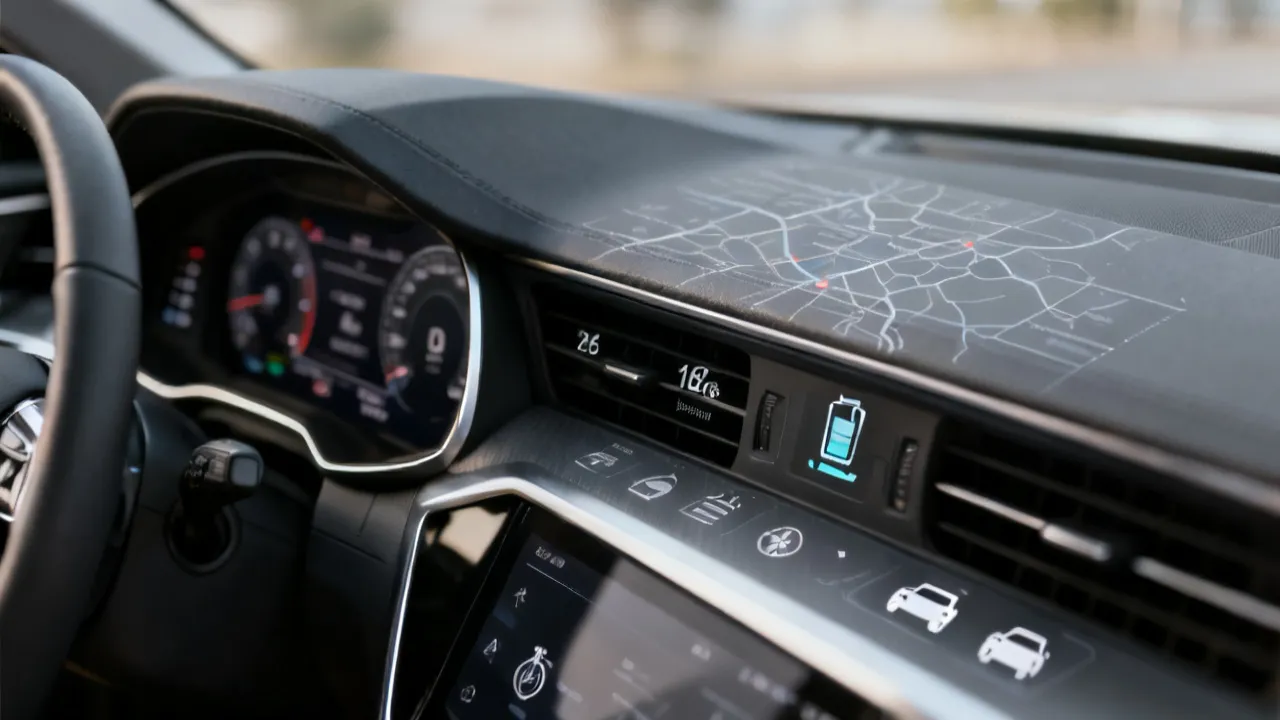
Why Delfos Telematics Matters for Fleet Visibility and Decision-Making
Delfos Telematics is positioned as a telematics solution for organizations that want more consistent, actionable information from vehicles and mobile assets. In practice, telematics platforms usually centralize location, trip patterns, event logs, and diagnostic signals—enabling fleet managers, safety teams, and operations leaders to move from “hunch-based” decisions to monitored, documented outcomes. This guide takes an expert, supply-chain aware perspective on how to evaluate Delfos Telematics deployments, what “fit” means by use case, and what conditions commonly affect installation success.
Because telematics is used in real operations—busy depots, mixed vehicle fleets, and varied driver routines—implementation quality matters as much as feature lists. A careful assessment helps you avoid mismatched hardware, unclear internal ownership of data, and reporting that teams cannot operationalize.
To make telematics truly valuable, you need more than data availability. You need a reliable chain: the device must capture correct signals, the platform must interpret them consistently, and the business must be able to convert insights into actions. When one link fails—poor installation, inconsistent event logic, unclear alert response ownership, or dashboards that don’t match daily workflows—the organization ends up paying for “information” that doesn’t reduce operational friction.
What Delfos Telematics Typically Enables in Operational Terms
From an industry standpoint, telematics value is rarely just “tracking.” It is the combination of (1) data capture, (2) secure transmission, and (3) decision-ready workflows. With a platform like Delfos Telematics, organizations generally aim to support:
- Fleet visibility: Knowing where assets are and how they move over time, including location trends that help dispatch planning and route rationalization.
- Operational oversight: Understanding trips, stops, and route patterns to improve planning, reduce dwell time, and identify process bottlenecks.
- Behavioral insights: Interpreting events related to driving style and safety signals (where provided by the system’s data sources), supporting coaching and safer operations.
- Maintenance and diagnostics support: Using device- or vehicle-derived signals to trigger checks earlier, reduce breakdown risk, and improve scheduling accuracy.
- Compliance and documentation: Creating auditable records that can support internal policies and external reporting needs, especially when safety, emissions, or duty-of-care rules matter.
How these outcomes materialize depends on configuration: vehicle compatibility, sensor input types, reporting cadence, and user training. Therefore, evaluation should focus on your operational priorities first, then map features to those priorities. A helpful mental model is to define the “decision objects” your business cares about (e.g., approve a route change, schedule a preventive service, issue coaching after an event, dispatch a replacement vehicle). Telematics should produce the specific evidence those decisions require, in the format and timing your teams can use.
In addition, telematics value often multiplies when it connects with existing operational systems. For example, if your maintenance team uses a ticketing system, the telematics platform should ideally support workflows that reduce manual transcription. If your dispatch planning relies on spreadsheets or a legacy TMS, you need a practical plan for exporting or integrating data. Even without deep system integrations, consistent reports can still reduce effort if they are delivered in a way the organization already trusts and uses.
Critical Selection Criteria Before You Commit
Even strong telematics platforms can underperform when they are selected for the wrong organizational problem. Below are the criteria an expert typically prioritizes when assessing a solution such as Delfos Telematics. Think of these criteria as reducing risk across four categories: technical risk (will it work on your vehicles?), data risk (is the interpretation reliable?), adoption risk (will teams use it?), and governance risk (can you control and audit it?).
1) Vehicle compatibility and data sources
Telematics systems may draw data from an installed device, vehicle diagnostics (OBD or gateway interfaces), or both. Compatibility should be verified for your mix of vehicles (e.g., passenger cars, light commercial vehicles, trucks, specialized equipment). Ask whether Delfos Telematics supports the data signals you expect—especially diagnostics—without requiring excessive custom work.
An expert approach goes beyond “does it connect?” and asks “what signals will we reliably get, for every vehicle class?” Some fleets have mixed makes/models and different production years. Even when an OBD interface exists, the actual availability of diagnostic parameter IDs (PIDs) can vary. This matters if you want maintenance triggers based on engine health, fault codes, battery health, or warning lights.
Also consider non-road assets and special configurations. If your fleet includes equipment used in depots, construction sites, or cold storage zones, you may face different network conditions, different power stability, and different installation constraints. A telematics device that works well on passenger cars can fail on specialized assets if mounting and environmental protection are not addressed upfront.
2) Data accuracy and event logic
Operational decisions depend on trustworthy event timing and meaningful thresholds. You should verify how the system distinguishes routine driving from notable events, how it handles GPS “urban canyon” conditions, and whether data outputs can be explained to end users.
Accuracy is not only about GPS points. For fleet operations, event logic often includes interpretations such as “idling,” “hard braking,” “harsh acceleration,” “geofence entered,” “stop duration,” or “detour.” Each of these event types can affect reporting and downstream actions (like alerts to supervisors). Therefore, the evaluation should include:
- False positive analysis: Do you get too many “events” for normal driving conditions?
- False negative analysis: Do you miss meaningful events during poor connectivity or at depot boundaries?
- Consistency across environments: Does event interpretation behave similarly across cities vs. highways, and day shifts vs. night shifts?
- Traceability: Can users understand how an event was generated (e.g., thresholds, sensor inputs, and time windows)?
When possible, request sample reports and validate them against known operational logs. For instance, compare telematics-derived trip start times to dispatch logs. Compare diagnostics-based fault code events to maintenance records. Compare reported idle time to documented operational procedures (e.g., waiting for loading/unloading). This builds confidence that the platform’s logic matches the reality your teams operate in.
3) Reporting usability for different roles
A common failure mode is rich data with low usability. Evaluate dashboards and reports by role: dispatch, maintenance, safety, HR/operations, and executives. If managers cannot turn reports into actions—such as reassigning routes, planning maintenance windows, or addressing safety coaching—adoption stalls.
An expert evaluation includes “workflow walk-throughs.” For each role, pick a realistic scenario and observe whether the platform supports it end-to-end. For example:
- Dispatch: A route has delays today. Can dispatch identify which vehicles are stuck where, for how long, and what alternatives exist?
- Maintenance: A vehicle has an intermittent fault. Can maintenance see the history, understand severity, and prioritize diagnostics?
- Safety: A driver is flagged for multiple harsh braking events. Can safety staff review context and provide coaching without unfair targeting?
- Executive: Leadership needs monthly trends tied to cost, risk, and compliance. Can they get a clear view without digging into data exports?
Pay attention to report timing and cadence. A dashboard that updates slowly may be adequate for monthly trends but not for daily dispatch decisions. Conversely, real-time dashboards can be too noisy without proper filtering. The key is matching refresh frequency and detail to the decisions being made.
4) Governance, permissions, and auditability
Operational and privacy governance matter. Confirm user role controls, data retention parameters, and audit trails for key changes (configuration updates, user access changes, and report rule adjustments). These safeguards are especially important in multi-site organizations.
Governance is often underestimated because teams focus on technical installation. However, governance impacts internal trust. If drivers believe their data is being used unfairly, or if managers suspect reports can be changed without oversight, the organization may resist adoption or experience conflict between departments.
Ask about:
- Role-based access controls: Who can view which vehicle data and which event categories?
- Data retention and deletion policies: What happens to historical location data? Is there a retention schedule?
- Audit logs: Are configuration changes recorded? Are report threshold adjustments logged?
- Export controls: Can any user export raw data? Are exports restricted or logged?
- Change approval workflows: Can admins approve alert rule changes and maintain consistency across sites?
In addition, governance includes process governance: who owns alert review, who decides whether a maintenance check is warranted, and who can override actions. Without explicit ownership, teams can become overwhelmed by alerts or ignore them altogether.
5) Implementation workload and change management
Telematics rollouts are not “install and forget.” Confirm who owns configuration, who reviews alerts, and how drivers are informed. Implementation should include a practical communications plan and a training pathway that matches each team’s responsibilities.
Implementation success typically depends on how well you manage change across four stakeholder groups:
- Drivers: They need clarity on what is measured and how it will be used (coaching vs. disciplinary, for example), plus a channel to ask questions.
- Supervisors: They need consistent workflows for reviewing events and turning them into actions.
- Maintenance technicians: They need a practical way to use telematics-driven signals for prioritization.
- Operations leadership and compliance: They need governance, reporting assurance, and audit-readiness.
Ask the supplier what training materials are provided, what configuration work is included in onboarding, and what the customer must handle internally. The cost of implementation isn’t only monetary; it is also the opportunity cost of staff time. When internal workload is underestimated, adoption suffers and the platform may be used only partially.
Price and Supplier Considerations: How to Evaluate Without Assumptions
You asked to integrate price information and supplier details. However, no specific numeric price, currency, or named supplier partner for Delfos Telematics was provided in your prompt. In this situation, the very objective approach is to explain how price is commonly structured and what supplier-provided items you should request—so you can compare proposals apples-to-apples.
For telematics solutions, pricing commonly reflects one-time costs (hardware, installation, onboarding) plus recurring fees (connectivity/data service, platform access, support, and sometimes analytics modules). An expert evaluation should request an itemized quote covering:
- Hardware scope: Device types, mounting accessories, cables, and any vehicle-specific adapters.
- Installation model: On-site vs. partner installation, installation windows, and expected turnaround times.
- Connectivity: Data transmission service duration and any roaming or coverage constraints.
- Platform access and modules: Which dashboards/reports are included; which are add-ons.
- Support tiers: Response times, escalation paths, and operational hours.
- Data and user management: Included users, roles, and any limits on history or storage.
- Decommissioning or replacements: What happens at end-of-contract and device replacement costs.
When suppliers are transparent about these elements, comparison becomes straightforward. When proposals remain vague, the “true cost” often emerges during onboarding and configuration. A frequently overlooked cost driver is rework—if installation must be redone due to incorrect mounting, cable routing issues, or compatibility gaps. Another hidden cost driver is change management: if training is not included, organizations must allocate internal time to educate users and build workflows.
To evaluate price in a structured manner, consider building a cost model that includes:
- Total cost of ownership (TCO): Hardware + installation + connectivity + platform + support + potential integration work.
- Time-to-value: How long until the first meaningful workflow is operational (e.g., maintenance triage or safety coaching reports).
- Risk-adjusted cost: If the platform’s event logic is unreliable, the effective cost increases because staff time is spent chasing errors.
Also ask for commercial terms that protect continuity: what happens if connectivity coverage is insufficient in certain operating zones, whether there are service credits, and how device replacements are handled during the contract term. A low initial quote can be expensive if operational support and replacements are costly.
Industry Context: Why Telematics Adoption Is So Operational
Telematics has moved from “fleet tracking” toward broader operational intelligence. Industry research commonly highlights that fleets seek benefits in routing efficiency, compliance, maintenance planning, and safety programs. For supporting evidence, stakeholders typically reference authoritative sources such as:
- OECD/European Commission and national road safety publications for safety and monitoring context;
- International standards and regulatory guidance related to data governance and vehicle operations;
- Industry analyst reports from established firms that summarize adoption drivers and market dynamics.
To keep this guide objective and decision-grade, it avoids speculative performance claims. Instead, it focuses on verifiable evaluation steps you can apply directly to Delfos Telematics.
Operational teams usually adopt telematics because it supports measurable improvements such as reduced unscheduled downtime, improved utilization, and more consistent safety coaching. However, adoption quality matters: if telematics is treated as a “IT project” rather than an operational program, the organization ends up with dashboards that no one uses and alerts that no one reviews.
Therefore, the right evaluation includes internal interviews and workflow mapping. Ask dispatch how they handle disruptions today. Ask maintenance how they prioritize diagnostics. Ask safety how coaching sessions are documented. Then evaluate whether telematics can provide evidence that fits those workflows—at the right level of detail and with the right controls.
Step-by-Step Implementation Guide (Evaluation to Rollout)
Below is a practical, expert-led process you can use to implement Delfos Telematics smoothly—covering discovery, configuration, pilot testing, staff adoption, and operational handover. While the order below is a typical best practice, you can adapt it to your procurement and operational constraints.
- Define success metrics by department
Start with measurable outcomes. For example: improved dispatch planning, reduced unplanned maintenance checks, or better consistency in safety coaching workflows. Translate them into what data and reports must provide. Ensure each metric has a baseline measurement plan—otherwise, you won’t know whether telematics created improvement. - Inventory your fleet and constraints
Document vehicle make/model, year ranges (where relevant), expected use patterns, depot locations, and any special operating conditions (cold chain, construction sites, off-road usage). Compatibility affects the hardware and installation plan. Also document expected power conditions (some vehicles experience frequent battery cycling), because poor power handling can cause device downtime. - Request an itemized Delfos Telematics proposal
Ask for a line-by-line breakdown of hardware, installation, platform modules, support, and recurring costs. If the supplier mentions “included” functionality, request examples of the exact dashboards/reports you will receive. Require a statement of responsibilities (RACI-style if possible) so it is clear what the supplier configures vs. what your team configures. - Confirm data mapping and event logic
In a technical workshop, confirm how key events are generated and how GPS and diagnostic signals are interpreted. The goal is to ensure that team decisions will rely on data that is explainable and consistent. During this step, request sample event logs for edge cases, such as partial GPS coverage, idling at depots, and intermittent diagnostic availability. - Prepare governance and user roles
Define who can view what, who can export reports, and how sensitive information is handled internally. Decide whether some data is intended for operational coaching only or for broader managerial review. Establish clear roles for alert review and maintenance triage to prevent “alert fatigue.” - Pilot with a representative subset
Choose vehicles that reflect your typical mix and edge cases. Run the pilot long enough to capture daily operational variance (routes, weather-like conditions if applicable, shifts, and depot changes). A good pilot includes at least a small number of vehicles from each class that might behave differently (e.g., different years or different duty cycles). - Validate accuracy and workflow fit
Compare telematics outputs with operational records you already trust (e.g., basic mileage logs, known dispatch patterns, maintenance tickets). Identify gaps and adjust thresholds, report rules, or training. Treat this as an iterative loop rather than a single validation check. - Train drivers and supervisors before full rollout
Training should cover: what the system records, how it is used, what drivers can do to reduce false positives, and how teams will respond to alerts. If the platform includes driving behavior signals, provide a coaching framework so supervisors understand how to interpret events fairly and consistently. - Go live with a controlled rollout schedule
Avoid “all vehicles at once.” Use phased onboarding and a change-approval mechanism for configuration updates during early operations. This helps ensure that improvements discovered during the pilot don’t create new issues across a larger fleet. - Operate, review, and continuously improve
After go-live, review report usage and alert quality. Adjust governance rules and improve training based on real feedback. Successful deployments evolve, rather than remain static. Establish a quarterly cadence for reviewing thresholds, data quality indicators, and adoption progress.
To make the rollout more resilient, consider defining a minimum set of “quality gates” that must be met before scaling. Examples include:
- Device uptime and connectivity stability in all primary operating zones.
- Event classification accuracy above an agreed threshold (e.g., idling detection aligns with known loading procedures).
- Report usability feedback from each target role.
- Governance processes tested (e.g., who approves threshold changes and how audit logs are verified).
These quality gates reduce the risk that the deployment scales issues into later phases.
Conditions and Requirements Commonly Needed for Successful Deployment
Telematics deployments succeed when operational and technical requirements align. Below is a comparison-style supplement that clarifies conditions typically requested during a Delfos Telematics rollout. (This is not a pricing table; it is a requirements reference to support supplier discussions.)
| Area | What to verify | Why it matters |
|---|---|---|
| Hardware installation | Mounting suitability, power/cable routing, and environmental protection | Improves device reliability and reduces downtime |
| Data connectivity | Coverage assumptions for your operating areas and fallback handling | Prevents missing logs during critical operations |
| Vehicle interfaces | OBD/gateway compatibility where diagnostics are expected | Determines whether diagnostics-driven insights will be available |
| Permissions and roles | User access boundaries and report export rules | Supports governance and reduces internal friction |
| Report governance | Who can change thresholds, alert rules, and reporting cadence | Maintains consistency and auditability |
| Operational ownership | Who monitors alerts and who initiates actions | Ensures data becomes action, not just observation |
| Training and adoption | Driver messaging and supervisor workflow training | Improves data quality and reduces perceived unfairness |
| Support model | Incident response times and escalation contacts | Shortens outages during critical operations |
Beyond these baseline conditions, many successful deployments include additional requirements that reduce “operational surprises.” Examples include:
- Change management for geofences and routes: If your operational boundaries change (new depot gates, construction zones), who maintains geofence definitions and how quickly are updates rolled out?
- Battery and vehicle downtime policies: If vehicles go offline periodically, how does the platform handle missing events, and how is device uptime monitored?
- Data quality monitoring: Establish internal KPIs like “percentage of trips with complete location track” or “percentage of vehicles with diagnostic availability.”
- Device lifecycle management: Clarify what happens when devices fail, are replaced, or need reprogramming due to vehicle changes.
These conditions are often the difference between a pilot that looks good and a scaled deployment that remains stable and trusted.
FAQ: Delfos Telematics for Fleet Teams
1) What is Delfos Telematics used for?
Delfos Telematics is used to support fleet and asset visibility and operational oversight by collecting vehicle-related data and presenting it through dashboards and reports. Teams typically apply it to trip tracking, operational planning, driving behavior insights (where available), and maintenance/diagnostics support.
In many fleets, telematics becomes part of a wider operational cadence. For example, weekly reports might identify vehicles with repeated delays or high idling patterns, and monthly summaries might guide maintenance planning and safety training targets.
2) How should we evaluate whether it fits our fleet?
Evaluate fit by starting with your operational goals—dispatch optimization, safety coaching workflows, maintenance planning, or compliance documentation—then verify compatibility with your vehicle types and the exact data sources (location and diagnostics signals) that the system will rely on.
A strong fit assessment also checks constraints: network coverage, installation opportunities, operational shift patterns, and how drivers will interact with supervisors reviewing reports.
3) Does deployment require significant internal effort?
There is typically an onboarding effort for configuration, user role setup, and workflow definition. However, the top supplier proposals clarify responsibilities: what the supplier sets up versus what your team owns, and what training is included.
Internal effort can be minimized by predefining your governance model and alert response processes before full installation starts. If you delay those decisions, you risk spending staff time during onboarding resolving questions that could have been answered during planning.
4) What data quality issues should we watch for during the pilot?
Watch for GPS coverage gaps, event misclassification, inconsistent diagnostic availability across vehicle types, and reporting formats that do not match how your teams work. Validate outputs against known operational records during the pilot.
Also verify time synchronization issues. If event timestamps are inconsistent due to device clock drift or ingestion delays, teams might misinterpret sequences (for example, diagnosing an incident as happening before a trip started). A pilot should validate both “what happened” and “when it happened.”
5) Can different departments use the same telematics platform effectively?
Yes, but only if the reporting design is role-aware. Dispatch, maintenance, and safety teams need different dashboards, thresholds, and action workflows. A well-structured permissions model supports this multi-role usage.
Multi-department usage becomes easier when you define shared data standards. For instance, agreeing on definitions like what constitutes “a trip,” “a stop,” or “an idle event” helps ensure that different teams aren’t arguing about different interpretations of the same underlying signals.
6) Is it possible to set up alerts and thresholds?
Very telematics platforms allow configurable alert rules or event thresholds. You should confirm who can change those settings, how changes are documented, and what review process is used to prevent drift from operational standards.
When thresholds are too aggressive, teams drown in alerts. When thresholds are too lenient, safety and maintenance signals lose value. The pilot should include threshold tuning with stakeholder feedback, and governance should define who approves changes.
7) How do we handle governance and privacy concerns?
Define role-based access, retention expectations, and internal use policies. If telematics includes driving behavior signals, establish coaching guidelines and ensure supervisors understand how to interpret events responsibly.
To reduce privacy-related conflict, many organizations document telematics usage in a policy that clarifies purposes, who can view raw events, and how data may be used in coaching and operational improvement versus disciplinary contexts. The specific policy depends on your jurisdiction and internal HR practices.
8) What should be included in a quote for Delfos Telematics?
Request itemized details for hardware, installation, platform modules, recurring platform/connectivity fees, support tiers, onboarding services, and replacement/decommissioning terms. Avoid comparing proposals that only share a single bundled number without scope clarity.
Also request a statement describing what happens if devices are removed, replaced, or moved between vehicles. Some fleets reassign assets regularly; the contract should reflect that operational reality.
9) What is a sensible pilot duration?
Choose a duration that reflects route variation and operational cycles. The key is that the pilot must produce enough data for accuracy validation and workflow adoption feedback, not just a brief technical confirmation.
In many organizations, a pilot is more effective when it covers at least one full planning cycle (e.g., two to four weeks), allowing maintenance and dispatch patterns to repeat in different conditions.
10) How do we ensure adoption by drivers and supervisors?
Adoption improves when communication is clear: what the system measures, what it is used for, and what behaviors or processes drivers can adjust. Supervisors should be trained on how alerts translate into consistent actions.
Adoption also improves when there is a feedback loop. If drivers see repeated false positives, they should know how to report issues or request a threshold review. Likewise, supervisors should be able to report when alerts are not useful and require tuning.
Expert Checklist: Common Pitfalls to Avoid
When experts review telematics rollouts, recurring pitfalls include:
- Feature-first buying: Selecting based on a broad feature list instead of mapping features to operational decisions. If your dispatch decisions don’t require a particular analytics module, paying for it can create complexity without value.
- Unclear ownership: No named owner for alerts, maintenance triggers, or report review. Without ownership, issues go unresolved and teams lose trust.
- Pilot without edge cases: Testing only “easy” vehicles/routes and discovering issues later. Edge cases often reveal compatibility limitations or connectivity gaps.
- Training that targets the wrong audience: Teaching drivers what managers should understand, or vice versa. Training should match responsibilities and decision authority.
- Governance gaps: Overly broad access or unclear permissions leading to internal conflict. Governance affects trust and fairness perceptions.
- Assuming data is “instant”: If alerts rely on connectivity that can be delayed, operational teams may make incorrect decisions expecting real-time updates.
- Ignoring installation quality: Poor mounting or cable routing can lead to device outages, intermittent diagnostic failures, and repeated rework.
Using Delfos Telematics effectively means treating the rollout as an operational program—supported by governance, training, and continuous improvement. The platform’s best features do not deliver outcomes unless operational teams can reliably use them.
Bottom Line: A Practical Path to Real Outcomes with Delfos Telematics
If your organization wants more consistent fleet oversight, Delfos Telematics can be evaluated as a platform that supports visibility, operational analysis, and maintenance-related decision workflows. The strongest deployments are not those with the very dashboards, but those where data is trusted, roles are defined, and reports are translated into actions that reduce operational friction.
To proceed, request an itemized scope from your Delfos Telematics supplier, validate compatibility for your fleet mix, run a representative pilot, and then scale with training and governance built into the rollout plan.
At the end of the day, telematics ROI is not only a function of having data. It comes from aligning telematics outputs with the operational processes that create costs, delays, safety risk, and maintenance downtime. When Delfos Telematics is deployed with that alignment in mind—technical readiness, data reliability, workflow fit, and accountable governance—fleet visibility becomes a decision-making capability rather than a reporting exercise.
-
1

Maximizing Your Purchase: Ram 1500 Deals and Towing Capacity
-
2
Maximizing Benefits of Solar Panels: Costs and Energy Efficiency
-
3
Affordable Stair Lifts for Seniors: A Comprehensive Guide
-
4
The Ultimate Guide to Lab-Grown Diamonds: Ethical & Cost-Effective Choices
-
5
The Ultimate Guide to Weight Loss Injections, Metabolism, and Appetite Suppression