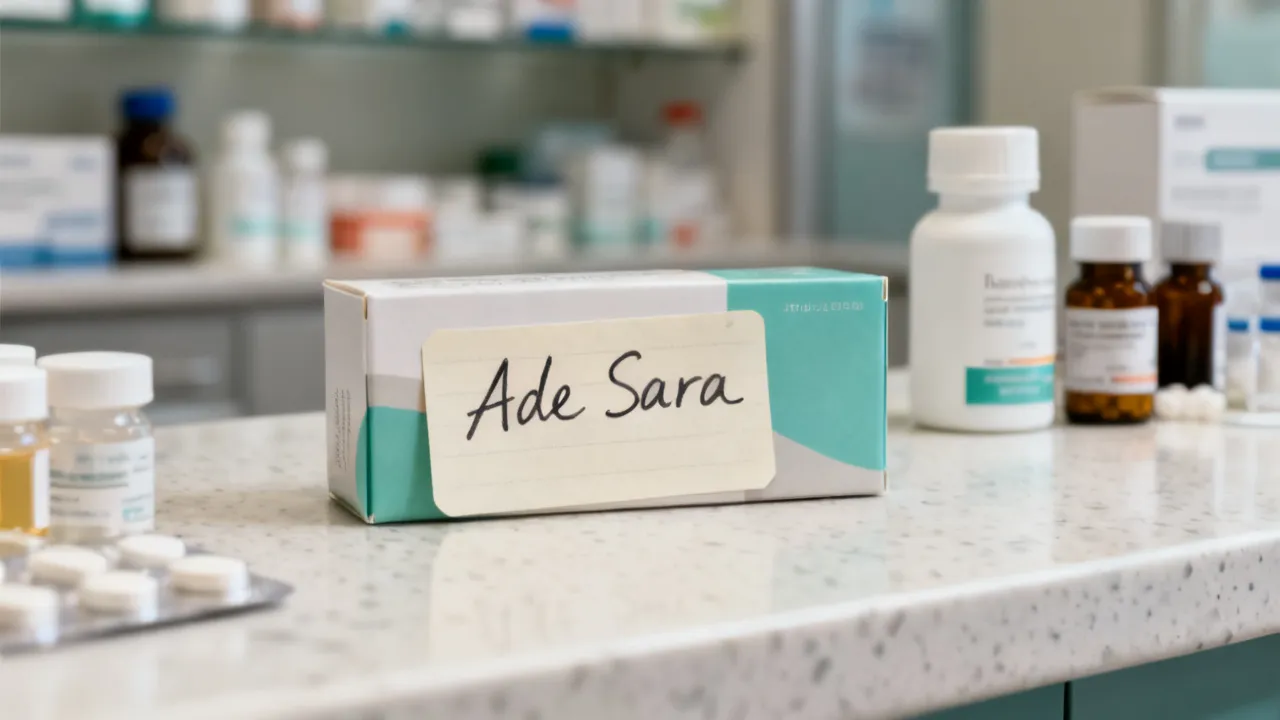
Pmoc Abrava: Industry Overview and Practical Sourcing Guide
This guide explains Pmoc Abrava in an objective, procurement-focused way—what it is, how it’s typically specified, and what buyers should verify before ordering from suppliers. Background sections clarify common roles, regulatory considerations, and quality expectations. A later section compares sourcing approaches, outlines a step-by-step evaluation process, and lists practical conditions for safe, compliant purchasing.

Critical buying considerations for Pmoc Abrava (start here)
When sourcing Pmoc Abrava, the decisive factor is not only availability, but verifiable specification alignment. Buyers should confirm identity, intended use, material compatibility, traceability documentation, and quality controls before any purchase decision. In many procurement workflows, issues later attributed to “product differences” actually trace back to missing documentation (such as CoA requirements), unclear grade definitions, or mismatched application parameters. From an industry perspective, the very cost-effective path is to reduce uncertainty early through structured technical checks and clear supplier responsibility—because uncertainty tends to multiply downstream into delays, re-testing, production interruptions, and compliance risk.
Because your request references “price information” and “supplier details” but does not provide specific numeric values or supplier names, this article focuses on how to evaluate pricing and supplier reliability rather than asserting unverified costs. In practice, Pmoc Abrava pricing varies by grade, packaging, purity/specification level, lead time, and documentation completeness. Therefore, the buyer’s goal should be to compare “apples to apples” quotations—same specification, same package size, same Incoterms, and same expected delivery timeline—before deciding on the top commercial option. If the quotes cannot be normalized into an equivalent comparison, the correct approach is not to “choose the cheapest,” but to demand a clarification package from each supplier so the commercial decision can be anchored to the same technical baseline.
What Pmoc Abrava typically refers to in procurement terms
Pmoc Abrava is presented here as a procurement-relevant product label/identifier used in industrial purchasing contexts. In real-world industry operations, product identifiers can correspond to a chemical, a formulation component, or a branded/internal stock keeping unit tied to a specific specification set. Buyers should treat the label as a starting point and validate the actual technical identity through documentation and sample verification when required by your internal quality system.
From an expert sourcing standpoint, the very important question is: “What specification does this identifier map to?” That specification then drives downstream requirements such as storage conditions, handling precautions, quality test methods, and compatibility with your existing process controls. For example, two products could share a similar name but differ materially in impurity thresholds, stabilizers, moisture content, or particle size distribution—differences that might not be visible in a simple label review but can materially affect manufacturing outcomes.
It is also worth acknowledging that in many procurement ecosystems, terms like “Pmoc Abrava” can be used inconsistently across departments (sales quotes, technical documents, logistics paperwork). If the purchasing team uses one definition and the quality team uses another, the risk of mismatch grows dramatically. The practical safeguard is to require a single, written specification mapping that both procurement and QA can reference as the authoritative definition of the product being purchased.
Why specification verification matters more than marketing descriptions
In many procurement disputes, the root cause is a gap between the buyer’s expectation and the supplier’s definition. Even when the same label is used, variants can exist in:
- Purity or assay level (and the testing method used to measure it)
- Impurity profile (which can affect performance, safety, or compliance)
- Physical form (powder, liquid, granules) and relevant handling parameters
- Stability and packaging (moisture sensitivity, container compatibility, shelf life)
- Batch traceability (batch/lot numbering and record retention)
For Pmoc Abrava, buyers should request documentation that clearly confirms the above items in relation to the purchased grade. If your facility operates under a formal Quality Management System (for example, ISO-aligned procedures), make sure supplier outputs map cleanly to your incoming inspection and release workflow. In practice, “specification verification” is not a single request—it is the act of ensuring your entire evidence package is consistent, lot-specific, and aligned with your internal acceptance criteria.
Another key reason verification matters: product performance is frequently tied to how the specification is measured. Two suppliers may report an assay within the same numeric range but use different methods, different sample preparation steps, or different instrumentation standards. Without method alignment, your internal verification may fail because the test results are not directly comparable. Therefore, a high-quality supplier will not only provide the numeric results but also the specification sheet with test methods, acceptance criteria, and any relevant testing standards.
Quality and compliance: the objective checklist suppliers should be able to provide
Industry top practice is to obtain evidence that the product meets established requirements. Without presenting any unverified claims, the following are commonly requested for controlled procurement:
- Certificate of Analysis (CoA) for the specific batch/lot
- Specification sheet describing grade, acceptance criteria, and test methods
- Safety data relevant to your jurisdiction (for example, SDS content)
- Traceability documentation (batch/lot, manufacturing details)
- Packaging and storage guidance aligned with the product’s stability needs
- Intended use statement and any relevant regulatory context
For regulated environments, these documents often determine whether a product can be released for production use. The procurement team’s job is to ensure that supplier documentation is complete enough to satisfy your internal and customer-facing audit requirements. QA’s job is to ensure that the evidence is technically meaningful and consistent with your validated test methods and product acceptance procedures.
To make this checklist operational, buyers should define (internally) the minimum required documents for release. If you do not define “minimum required,” requests can become inconsistent across buyers and shipments, resulting in partial document sets that create release delays. A common best practice is to implement a “document completeness gate” before any physical goods are received or immediately upon receipt, depending on your facility’s receiving process.
How to evaluate price for Pmoc Abrava without overpaying
Because you did not provide numeric pricing data, this section explains how to interpret quotes objectively. When comparing supplier offers for Pmoc Abrava, treat price as only one element of total cost. The very practical approach is to calculate a total landed cost that accounts for:
- Packaging and unit size (net content, not just label weight)
- Lead time (including processing and shipping time)
- Shipping mode (temperature control or special handling may be required)
- Documentation completeness (missing documents can create costly rework)
- Incoming inspection costs (sampling, testing time, and acceptance risk)
- Return or replacement risk if batch documentation does not meet acceptance criteria
A “lower price” offer can become more expensive if it introduces uncertainty—especially if your quality team needs additional verification testing or cannot confidently release the material. In high-risk cases, uncertainty can also translate to production downtime, expedited shipping costs, and the administrative burden of nonconformance investigations.
Buyers often unintentionally compare quotes that are not equivalent. For instance, one supplier may quote an attractive unit price but provide documentation that is “generic” rather than lot-specific. Another supplier may include tighter packaging protection that reduces risk of moisture ingress, but the price is higher. The correct evaluation compares the value of assurance, not just the commodity price.
It can also be useful to separate costs into categories:
- Direct acquisition cost: unit price, packaging cost (if itemized), and any handling fees.
- Logistics cost: shipping, customs handling, insurance, and potential temperature-controlled transport.
- Compliance cost: time and expenses for document verification, record retention, and any regulatory review.
- Quality cost: sampling and in-house testing, plus potential contract lab charges.
- Operational risk cost: probability-weighted downtime or nonconformance handling.
This breakdown helps procurement justify decisions internally. Even when price is slightly higher, the total cost can be lower if compliance and quality costs are reduced and risk is controlled.
Supplier due diligence: what to verify before placing an order
Supplier reliability influences both cost and continuity of supply. For Pmoc Abrava, evaluate suppliers on verifiable aspects rather than assumptions:
- Quality system maturity: Do they follow consistent batch documentation practices?
- Batch traceability: Can they provide lot-specific records upon request?
- Responsiveness: How quickly do they answer specification questions?
- Clear labeling: Are packaging identifiers aligned with batch paperwork?
- Change control: Do they notify you if manufacturing conditions or sources change?
- On-time delivery performance: Use your own procurement history when available; otherwise request recent shipment references.
Where possible, incorporate a small pilot purchase or controlled trial shipment—especially if this is your first time sourcing Pmoc Abrava from a given supplier. This approach is common in industrial procurement because it limits risk while you validate performance against your internal acceptance criteria. A pilot order is not merely a “sample”—it is a structured test of the supplier’s documentation, labeling, and delivery readiness under real receiving conditions.
In due diligence, it is also useful to evaluate whether a supplier can support investigation when something goes wrong. Some suppliers respond well to clarifications and nonconformance investigations; others only provide generic statements. A supplier that can readily provide batch records, test results breakdowns, and manufacturing summaries demonstrates that you can defend your decision in an audit or customer query.
Step-by-step evaluation flow (brief version before the table)
Before you request final commercial approval, industry teams usually run a compact evaluation loop:
- Define the technical requirement: grade/specification and acceptance criteria.
- Request documentation: CoA, SDS (or equivalent safety documents), and specification sheets.
- Align packaging and logistics: net content, container type, lead time, handling requirements.
- Perform risk screening: historical supplier behavior, consistency of documentation.
- Validate via sample testing where required by your process controls.
- Finalize purchase terms: include batch-specific documentation commitments and delivery obligations.
Localization note: “nearby” sourcing considerations
Your instructions include a rule: if a location appears in keywords, replace it with “nearby”. In practical terms, sourcing “nearby” (i.e., within your region) can affect transit time and reduce the number of temperature-handling touchpoints. While this can improve schedule reliability, it does not remove the need for documentation verification for Pmoc Abrava. Even locally sourced products must still meet your specification and compliance checks.
When considering nearby sourcing, buyers should also evaluate local carrier capability. Sometimes regional shipping reduces distance but introduces variability in carrier handling. If the product is sensitive to moisture, temperature, or contamination, you still need evidence that packaging and transport controls are adequate—regardless of distance.
Comparison table: sourcing approaches for Pmoc Abrava (no links)
The table below compares common sourcing routes. Use it to structure internal discussions and align stakeholders around what “good” looks like. (No external links are included, per your request.)
| Approach | Top when you need | Key documentation to request | Main risk to manage |
|---|---|---|---|
| Single-supplier qualification | Consistency, streamlined approvals, stable batch records | Lot-specific CoA, full specification sheet, traceability records | Over-dependence if supply disruptions occur |
| Dual-source procurement | Continuity of supply and competitive quotation control | Comparable CoAs, defined acceptance criteria, change notifications | Specification drift between suppliers if not tightly controlled |
| Distributor vs. manufacturer route | Lower friction ordering and consolidated logistics | Manufacturer documentation forwarded for each batch | Unclear accountability for batch-level quality evidence |
| Sample-led onboarding | New application or first-time supplier evaluation | Document set matching sample identity; testing protocol alignment | Delayed qualification if testing timelines are not planned |
Industry expert conditions and requirements (procurement-ready)
Below are practical conditions that typically determine whether a Pmoc Abrava order can proceed smoothly from inquiry to release. These conditions are written as checkable requirements rather than assumptions.
Conditions / requirements
- Batch-specific documentation: CoA or equivalent evidence must correspond to the exact lot/batch shipped.
- Specification alignment: The supplier’s stated grade must match your internal product definition.
- Traceability and labeling: Package labeling must match paperwork identifiers.
- Storage and handling compatibility: Storage conditions must be feasible in your facility without compromising material integrity.
- Change notification terms: Include contractual expectations for notifying material or process changes that could affect quality.
- Nonconformance procedure: You should have a pre-agreed process for deviations (replacement, credit, or re-testing) based on documented criteria.
Step-by-step guide to source Pmoc Abrava responsibly
This guide expands the earlier flow into a more operational sequence. It is written for procurement, quality assurance, and technical evaluation teams working together.
-
Clarify the exact product identity
Confirm whether “Pmoc Abrava” is a branded identifier or an internal SKU, and request the supplier’s official mapping to a specification or formulation. -
Define acceptance criteria
Translate your use case into measurable requirements (for example: assay range, impurity limits, moisture considerations, and any performance-related parameters you can test in-house or via a contract lab). -
Collect the documentation set
Ask for: CoA (lot-specific), safety documentation (SDS or equivalent), and a specification sheet with test methods. -
Evaluate packaging and storage constraints
Confirm packaging type, net content, shelf life at delivery, and recommended storage conditions. Ensure your logistics can maintain required conditions. -
Conduct a technical and quality review
Compare supplier documentation against your acceptance criteria. If something is missing or ambiguous, request clarification before quoting final purchase terms. -
Plan an incoming inspection strategy
Decide what tests are required on receipt and what can be waived with strong evidence. For first-time suppliers, sample testing is often prudent. -
Align commercial terms with quality commitments
Ensure the purchase agreement includes commitments for batch traceability, correct labeling, and documentation delivery timelines. Clarify remedies for nonconformance. -
Perform a trial order (if applicable)
A controlled trial shipment validates that the material meets expectations under real receiving and processing conditions. -
Lock in good sourcing only after validation
If the trial meets requirements, proceed to longer-term orders with change notification clauses and periodic review of documentation consistency.
Deep-dive: technical due diligence beyond basic documentation
Many buyers stop at requesting a CoA and a specification sheet. While these are essential, additional due diligence can prevent recurring issues. For Pmoc Abrava, consider expanding your evaluation to include the following technical dimensions.
1) Specification granularity: grade, subtype, and acceptance thresholds
Suppliers may present “grades” at a high level (e.g., a general industrial grade versus a high-purity grade). Your internal needs, however, are often more specific. Ask suppliers to clarify:
- Is the grade defined by assay only, or does it include impurity thresholds?
- Are acceptance criteria temperature- or method-dependent?
- Are there subclassifications (e.g., low-moisture variant, stabilized variant, or a specific impurity target)?
- Is the grade consistent across manufacturing sites or time periods?
This step matters because if your process is sensitive to trace impurities or physical properties, a broad grade definition can be insufficient. Conversely, if your process is tolerant, you may be able to select a grade that meets needs without paying for unnecessary purity. The goal is not to select the highest spec; it is to select the correct spec.
2) Test method comparability and method equivalence
Even if two suppliers provide results within an acceptance range, differences in method can lead to inconsistent internal verification. Ask suppliers:
- What analytical methods are used (for example, chromatography type, spectroscopic method, titration method, etc.)?
- Are methods aligned with standard test procedures (internal or external references)?
- What are the method detection limits and quantitation limits relevant to the specification?
- Are there any method-specific sample prep steps that could affect results?
If your internal quality team has its own validated method set, request that suppliers indicate whether their CoA methods are directly comparable or whether you should rely on your own testing for release.
3) Impurity and contaminant risk mapping
Many procurement failures are not caused by the main component being “wrong” but by impurities causing unexpected outcomes. For Pmoc Abrava, you should consider asking for:
- Impurity list with quantitative or semi-quantitative ranges (as appropriate)
- Any known contaminants that are relevant to your process (for example, moisture-related impurities, catalyst residues, solvents, or isomeric forms)
- Any regulatory or customer-specific contaminant limits
In practice, impurity mapping allows technical teams to anticipate compatibility issues before purchasing. If your manufacturing process is sensitive to a particular contaminant class, you may require additional evidence beyond the standard CoA.
4) Physical property considerations: handling, dissolution, and process fit
Depending on the application, physical properties can be just as important as chemical purity. Request relevant information such as:
- Particle size distribution (if relevant for powders)
- Bulk density or flow properties (for dispensing and dosing stability)
- Moisture content and/or water activity (for moisture-sensitive materials)
- Stability indicators and recommended timeframe for use after receipt
Even if your process is robust, physical property differences can influence how a material behaves in mixing, dissolution, filtration, or reaction steps. If you do not account for these differences during onboarding, you risk variable performance across batches and time.
5) Packaging and container compatibility
Packaging is often treated as a logistical afterthought, but for sensitive chemicals it is a quality topic. For Pmoc Abrava, ask suppliers to specify:
- Container material compatibility (lined containers, plastics vs. stainless vs. glass)
- Seal integrity and closure design
- Moisture barrier properties (if moisture sensitivity exists)
- Headspace considerations for stable materials (where relevant)
Packaging that is “technically acceptable” can still cause quality drift if it allows moisture ingress or contamination. By requesting container compatibility information upfront, you reduce risk and support a faster incoming inspection decision.
6) Shelf life, expiry planning, and “time from manufacture” limits
A material’s shelf life is not just a static duration; it should relate to your receipt timing. Ask for:
- Shelf life remaining at time of delivery
- Manufacture date (or production date) and batch age limits
- Recommended retest intervals if the material has a defined requalification period
If your facility has strict release requirements, you may need to reject shipments that are too close to expiry or too old. Planning these limits during sourcing avoids costly returns.
Supplier documentation completeness: what “complete” really means
Procurement teams sometimes accept “documentation delivered” as a binary state. In reality, document completeness is more nuanced. You should define what “complete” means operationally—especially for Pmoc Abrava.
Typical documents required per batch
- Lot-specific CoA with results for defined acceptance parameters
- Lot/batch identification that matches labels and container IDs
- SDS relevant to the specific material and grade
- Specification sheet referencing your acceptance criteria for that grade
- Packaging details (container type, net weight, and any special handling statements)
Secondary documentation that can prevent downstream problems
- Certificate of origin (if your compliance regime requires it)
- Quality or manufacturing statement if special processing is performed
- Analytical report when CoA is abbreviated or when certain parameters require additional context
- Change notification records (for ongoing supply)
To make this actionable, consider creating an internal “document matrix” that lists each required document and indicates who is responsible for verification (procurement, QA, technical team). This reduces ambiguity. For instance, procurement might check that a CoA is attached, while QA checks that it is lot-specific and matches the grade. If those responsibilities are unclear, gaps can persist even when documents appear to be present.
Incoming inspection planning: balancing assurance and efficiency
Incoming inspection is a cost center, but it is also a risk control. The challenge is to determine the right balance for Pmoc Abrava.
Define an inspection strategy by supplier risk
A good approach is risk-based inspection:
- First-time supplier: verify more parameters and perform sample testing to confirm compatibility with your acceptance criteria.
- Qualified supplier: rely more on CoA data, but maintain periodic confirmatory testing.
- Supplier with documentation inconsistency: increase verification frequency and require improved documentation discipline.
- Critical application: even qualified suppliers may require periodic testing of key parameters.
This approach helps you avoid “over-testing” while still catching issues early. It also provides a rational basis for internal budgeting and justifies why certain shipments receive additional scrutiny.
Set quarantine and release thresholds
Operationally, you should define:
- What triggers quarantine (document mismatch, label mismatch, out-of-spec results, missing documentation)
- Who has authority to release or reject (QA lead, technical lead, procurement manager, etc.)
- What is the time window for supplier response and replacement
- How you handle partial shipments (especially if only some containers match the paperwork)
Having these thresholds defined reduces uncertainty when issues occur. Without them, teams can become paralyzed by decision delays, especially during urgent production schedules.
Nonconformance handling: define remedies before purchase
Nonconformance procedures are not just paperwork—they affect your actual costs and downtime exposure. For Pmoc Abrava, ensure purchase terms cover at least the following:
- Notification and response timelines (when must the supplier respond to a discrepancy)
- Remedy: replacement, credit, re-testing, or acceptance of deviation (with justification)
- Cost responsibility: who pays for additional testing, return shipping, and investigation labor
- Document correction process: what happens if CoA is delayed or corrected after shipment
If your contract is vague, suppliers may treat nonconformances as “negotiable,” which prolongs resolution. A contract with clear remedies reduces disputes and supports faster corrective action.
Operational compatibility: integrating procurement with technical reality
A common failure mode is that procurement focuses on ordering and documentation, while technical teams focus on performance, and neither has full visibility into the other’s constraints. To avoid this, integrate the evaluation process so that the technical needs of Pmoc Abrava are translated into procurement requirements.
Align use-case parameters with supplier documents
Ask your internal technical teams to define:
- Which parameters are performance-critical for your application
- Which parameters are “nice-to-know” but not required for release
- Which physical properties matter for your feeding, mixing, and reaction steps
- Which safety constraints are non-negotiable (handling, storage, and PPE requirements)
Then ensure your supplier documentation request includes those parameters. This avoids a situation where CoA provides many numbers but none are the right ones for your acceptance decision.
Plan for scaling and variability
Some materials behave consistently at scale; others show variability as production shifts from pilot to commercial volumes. For onboarding Pmoc Abrava, consider:
- Does your internal process assume a stable physical form?
- Does your formulation/dosing system require consistent particle flow or moisture content?
- Do you expect a change in performance tolerance when scaling up?
If yes, require confirmatory testing for early shipments and consider setting tighter controls during ramp-up.
Commercial terms that influence quality outcomes
Procurement terms can influence quality outcomes indirectly. For example, a supplier might quote a price that assumes fast processing, but your facility’s release process might add delays; those delays could affect how long the material remains in uncontrolled transport or storage. Therefore, when buying Pmoc Abrava, scrutinize the following:
- Incoterms: who controls shipping conditions and risk transfer
- Delivery window: what happens if the supplier misses a date
- Lead time guarantees: manufacturing cutoffs and documentation readiness
- Documentation delivery timing: when must CoA be provided relative to shipment
- Order quantity constraints: does smaller quantity change packaging quality or documentation completeness
Commercial terms should not undermine quality requirements. If a supplier can’t commit to documentation delivery timing, your facility may face release delays. Conversely, if your quality team needs two days to review CoA, the supplier’s documented timeline should account for that.
How to evaluate supplier change control for long-term supply
Long-term supply problems often occur because buyers receive an “identical label” while the supplier changes something behind the scenes—raw material source, manufacturing equipment, process parameters, or packaging components. To manage this, require change control expectations.
What to request
- Supplier’s change notification policy (how they communicate changes)
- Criteria for what triggers notification (e.g., impurity profile shift beyond thresholds, packaging changes, method changes)
- Whether changes require requalification or additional testing
- Lead time for change notification and effective date
What to do internally when a change occurs
When change notifications are received, your internal teams should run a mini impact assessment:
- Does the change affect parameters that are performance-critical for your product?
- Do you need to perform additional incoming tests for a defined number of batches?
- Do you need to update internal records (specification mapping, SOPs, approved supplier list)?
This is especially important for Pmoc Abrava if your process is sensitive to trace impurities or physical property shifts.
Frequently asked questions about Pmoc Abrava
FAQ 1: What does “Pmoc Abrava” mean in technical terms?
It depends on how the identifier is used by the supplier or in your industry. Treat it as a label that must be mapped to an explicit specification through documents such as the CoA and specification sheet. The safest approach is to confirm grade identity, purity/assay criteria, and batch traceability before acceptance.
FAQ 2: How should I compare prices for Pmoc Abrava across suppliers?
Compare quotes on a like-for-like basis: same grade/specification, same net content, same packaging and documentation scope, and the same delivery terms. Consider total landed cost (including logistics and documentation handling), not just the unit price on the quotation. If the quotes cannot be normalized—because grade definitions differ—ask for a technical reconciliation package before deciding.
FAQ 3: What documents should I require before placing an order?
At minimum, request a specification sheet and lot-specific CoA. Also request safety documentation (SDS or equivalent) and any relevant handling/storage guidance. If your quality system requires it, request traceability records and confirm test methods used for key parameters.
FAQ 4: Is it enough to receive a general certificate of quality?
For very industrial quality systems, generic certificates are insufficient. The evidence should correspond to the specific lot you receive. Batch-specific documentation reduces the risk of mismatch between paperwork and shipped material. If your supplier offers a “general” document, require that it be supplemented by lot-specific documentation for each shipment.
FAQ 5: Can I source Pmoc Abrava “nearby” to reduce risk?
Sourcing nearby can help reduce transit complexity and lead time variability, which may improve schedule reliability. However, documentation completeness and specification alignment remain essential regardless of location. Local sourcing does not replace quality verification. Also ensure that local carriers handle packaging in ways consistent with the storage and handling requirements you expect.
FAQ 6: What should I do if the received material does not match the CoA?
Follow your internal nonconformance procedure. Typical steps include: quarantine the lot, verify identifiers and batch numbers, review discrepancies against the specification, perform agreed tests if needed, and request replacement or credit as specified in your procurement terms. It is also advisable to document communication with the supplier and preserve evidence (photos, container IDs, CoA copies) to support investigation outcomes.
FAQ 7: How can I reduce the risk of specification drift over time?
Use change notification requirements in your contracts, perform periodic document consistency reviews, and run incoming inspection on a defined schedule. If performance is critical to your process, consider periodic sampling tests even after qualification. You can also maintain a “trend review” of incoming CoA results to detect drift early (for example, monitoring assay values and key impurity trends batch-to-batch).
FAQ 8: Do I need a supplier audit for Pmoc Abrava?
Not always, but it can be valuable—especially for first-time suppliers, regulated applications, or when documentation quality has historically been inconsistent. Audits should be risk-based and aligned with your acceptance strategy. Even when audits are not mandated, a strong paper trail (documented traceability, lot-specific evidence, change control policy) can serve as an alternative control pathway.
Background context: how products like Pmoc Abrava fit into industrial supply chains
In many supply chains, materials identified by a short label (such as Pmoc Abrava) operate as “controlled inputs” that must satisfy specification requirements to ensure stable outcomes in manufacturing. From a process engineering perspective, small differences in impurity profiles, physical properties, or stability behavior can translate into downstream variability. That is why procurement and quality assurance teams are expected to collaborate: procurement manages supplier competence and commercial terms, while quality confirms that the received batch meets technical acceptance criteria.
From a compliance perspective, documentation acts as the bridge between what a supplier claims and what a buyer can validate. In audits, the ability to show batch traceability and test method alignment often matters as much as the test results themselves. Therefore, the “real” decision for buyers is frequently about ensuring the documentation and traceability pathway is robust—not only the initial quote.
It is also important to recognize that supplier labels and documentation can change over time due to process improvements, corporate restructuring, or standardization of paperwork templates. Change control is therefore not only about chemical manufacturing—it is also about paperwork behavior. If a supplier changes their CoA format or labeling system, your internal receiving process might break unless you anticipate such change. This is another reason to maintain an integrated specification mapping and documentation review approach.
Practical guidance for stakeholder alignment inside your organization
It is common for procurement, QA, and technical teams to interpret product identifiers differently. To prevent confusion around Pmoc Abrava, align stakeholders around the following artifacts:
- One authoritative specification that defines grade and acceptance criteria.
- A documented evidence package that suppliers must provide for each batch.
- A defined receiving inspection plan that specifies which tests are mandatory on arrival.
- Clear escalation rules for discrepancies, delays, and documentation gaps.
This alignment reduces friction during audits, limits production disruptions, and shortens the time needed to qualify new suppliers. It also makes it easier to handle urgent orders without bypassing critical quality steps. When escalation rules exist, teams know whether to stop a shipment, hold quarantine, or proceed under a defined conditional release approach.
Conclusion
Sourcing Pmoc Abrava effectively requires disciplined verification: confirm specification identity, require batch-specific documentation, and evaluate supplier reliability through measurable quality and traceability signals. While pricing and supplier availability matter, they should be assessed in a like-for-like manner against total landed cost and the risk of nonconformance. By applying the conditions and step-by-step guide provided in this article, buyers can improve procurement outcomes and support stable, compliant operations.
-
1

Maximizing Benefits of Solar Panels: Costs and Energy Efficiency
-
2
Maximizing Your Purchase: Ram 1500 Deals and Towing Capacity
-
3
Affordable Stair Lifts for Seniors: A Comprehensive Guide
-
4
The Ultimate Guide to Lab-Grown Diamonds: Ethical & Cost-Effective Choices
-
5
The Ultimate Guide to Weight Loss Injections, Metabolism, and Appetite Suppression